Was It Worth Driving 1000 Kilometers To Find This Abandoned Mill? – A Winter Urbex Adventure

Why Is This Abandoned Mill So Fascinating? - A Forgotten Piece Of Industrial History

Hidden in Western Poland, this abandoned mill is one of those places that immediately makes you understand why urbex is about much more than simply entering old buildings. We traveled more than 1,000 kilometers in winter to see it, crossing a huge part of the country for a location that had been waiting quietly for years. From the outside, the complex already looked impressive: several connected buildings forming a large industrial estate, with weathered walls, empty windows, and traces of its former purpose visible everywhere. But its real story goes much deeper. The origins of the mill date back to the 14th century, when a water-powered mill was established near the river. Over the centuries, it was rebuilt, expanded, and transformed from a traditional water mill into a modern industrial facility. By the early 20th century, the complex had gained impressive new buildings, machinery, warehouses, and eventually a grain elevator. At its height, it could process around 68 tons of grain per day. Today, however, the sound of machinery has disappeared completely. Instead, the huge abandoned structure stands as a fascinating reminder of how quickly industrial landscapes can change.

abandoned historic grain mill exterior view

What Happened To This Historic Mill? - From Water Power To Abandonment

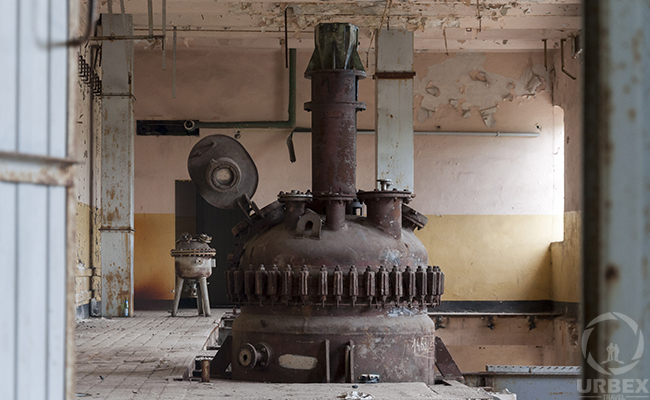
The history of this mill is surprisingly long and turbulent. Its first water-powered installation was created in the Middle Ages, using the nearby river and a specially constructed mill channel to power the machinery. During the centuries that followed, the mill survived wars, floods, changing owners, and major technological developments. In the 17th century, the Thirty Years’ War brought destruction to the surrounding estate, while later floods repeatedly damaged buildings close to the river. The complex eventually entered a new era in the 19th century, when it became associated with the influential Korn family. A major modernization was designed in 1914 and completed during the following years, introducing new industrial technology and allowing the mill to become energetically self-sufficient through its water turbine. New machinery from German manufacturers was installed during the 1920s, while further extensions in the 1930s and 1940s included additional storage space and a reinforced-concrete grain elevator capable of holding 800 tons of grain. After World War II, the mill was nationalized and continued operating for decades. Unfortunately, modernization could not save it forever. Financial problems eventually led to bankruptcy, and in 2009 the mill officially entered liquidation. Its historic machinery was subsequently removed, destroyed, or sold, leaving the enormous building largely empty.

rusty vintage flour mill machinery close up

Was The 1000-Kilometer Journey Worth It? - A Winter Adventure To Remember

For us, the story of this mill began long before we reached its gates. Traveling more than 1,000 kilometers in winter just to explore one abandoned industrial complex might sound excessive, but that’s exactly the kind of challenge that makes a trip memorable. The winter landscape added another layer to the adventure. Instead of arriving on a warm summer day surrounded by greenery, we approached the mill in a colder, quieter atmosphere that perfectly matched its abandoned character. The scale of the complex was impressive, and once inside, we could see how many different periods of its history were still reflected in the architecture. Empty floors, enormous industrial spaces, old structural elements, and traces of the machinery that had once powered the business created a fascinating atmosphere. What made the visit especially emotional was knowing that the mill had once been an important part of the local economy and had operated for centuries. Today, there was no movement, no workers, and no machinery – only silence. The journey also made us appreciate the exploration differently. When you drive such a long distance during winter, you don’t simply arrive at a location; you arrive with expectations, anticipation, and the feeling that you absolutely need to make the most of every minute inside. And thankfully, this place gave us plenty to remember.

derelict multi-story mill building snowy facade

Should You Add This Abandoned Mill To Your Urbex List? - Definitely, If You Love Industrial Ruins

This abandoned mill is a fascinating destination for anyone interested in industrial heritage, architecture, and forgotten places. Unlike a palace or historic villa, its beauty comes from machinery, functional architecture, enormous spaces, and the visible layers of technological change. During our travels, we’ve explored locations such as Strugienice Mill and Hilbert Mill, but this place has its own character and a particularly impressive history. What makes it even more special is the contrast between its long operational life and its relatively sudden decline. For centuries, people depended on mills like this one, first using water power and later increasingly sophisticated mechanical and electrical systems. Here, that entire evolution can be read through the buildings themselves. Sadly, much of the original technical equipment was destroyed or removed before the complex was left to deteriorate, which makes the remaining structure even more valuable. For us, however, the biggest memory will always be the journey: more than 1,000 kilometers through winter conditions to stand inside a place that had been silent for years. Sometimes the best explorations aren’t the easiest ones. They’re the places that demand time, distance, patience, and determination – and reward you with a story you’ll still be telling years later.

overgrown ivy entering through broken factory windows urbex
snowy courtyard of a derelict industrial mill
vintage milling machinery covered in dust and rust
spiral staircase in an abandoned historic building
ruined rooms with hanging wallpaper and debris
atmospheric light casting shadows in an industrial ruin
forgotten agricultural mill architecture in winter
abandoned mechanical grain separator inside a mill
rusty steps leading up through a decaying building
dusty wooden floors in an abandoned milling room
decaying historic grain mill interior photography
weathered metal gears and industrial remnants
decaying multi story old mill building exterior
weathered wooden stairs in an industrial ruin
raw structural beams inside a forgotten factory
overgrown ivy entering through broken factory windows urbex
rustic brick and concrete abandoned mill facade
forgotten factory interior with old machinery parts
antique staircase architecture in an old mill
abandoned kitchen space with ruined tiles
derelict multi-story mill building snowy facade
weather beaten historic flour mill ruins
corroded industrial equipment in a ruined mill
rusty vintage flour mill machinery close up
old arched windows overlooking a snowy landscape
vertical view down an abandoned spiral staircase
dilapidated milling complex landscape view
structural metal framing of an old grain processor
peeling paint and cracked plaster in a ruined mill
natural light through large industrial factory windows
abandoned historic grain mill exterior view
frozen wasteland around a ruined industrial factory
broken down milling apparatus in a dark room
decaying interior walls of an old industrial building
overgrown ivy creeping inside an abandoned mill room
vintage water mill exterior structural decay
decaying winding stairs inside a ruined mill
flaking yellow and white wall paint in ruins
vaulted ceilings in a dilapidated historic structure
overgrown grounds of an abandoned historic mill
multi level spiral staircase in an abandoned factory
weathered structural timber inside a grain mill
long empty hallways connecting ruined rooms
rusty machinery inside an abandoned mill
architectural details of a dilapidated industrial stairwell
empty abandoned room with crumbling walls
exposed pipes and wires in a decaying interior
derelict grain sifter in an industrial ruin
peeling yellow paint on walls by a staircase
derelict interior space with exposed brickwork
wooden door frames inside an abandoned building
old metal sorting equipment in a decaying factory
old rusty metal handrails on a spiral staircase
vintage industrial architecture showing severe decay
rusted conduits running along cracked plaster walls
Close Menu